Roof Leak Mold Removaland Remediation Las Vegas
Roof leak mold removal and remediation addresses mold and moisture affecting attics, roof decking, ceiling cavities, walls, drywall, insulation, closets, upper rooms, and other materials below a leaking roof. Water can travel away from the visible roof opening and remain hidden inside building materials. Water Mold Las Vegas organizes affected-area review, selective material removal, detailed cleaning, HEPA-supported air management, moisture checks, drying support, debris control, and repair preparation around the confirmed roof-water path.
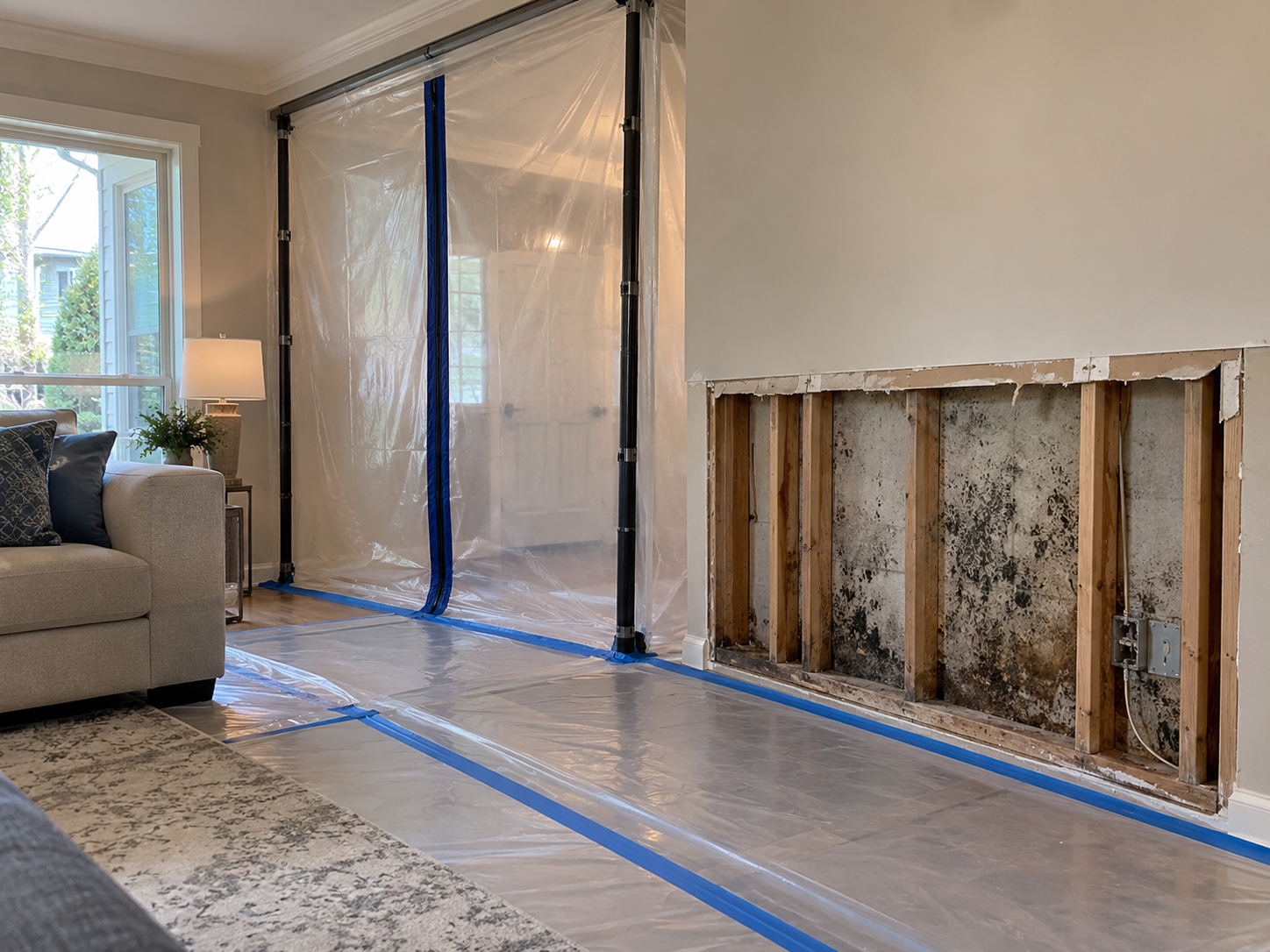
How Can A Roof Leak Lead To Mold?
Removal and remediation should follow the confirmed water path rather than treating every nearby surface the same. Some materials can be cleaned and retained, while damaged porous sections may require selective removal. Work can include controlled access, detailed surface cleaning, HEPA-supported air management, debris handling, moisture checks, drying support, and review of nearby accessible materials exposed to the same roof-water event.
Water Mold Las Vegas keeps roof-leak mold work tied to verified conditions and the actual affected area. A small flashing leak may affect one ceiling section, while a larger or repeated roof leak can reach attic materials, multiple wall sections, or adjoining rooms. The goal is to remove damaged material when necessary, clean retained surfaces, support drying, correct the roof source, and prepare completed areas for repair.
What Is Included In Roof Leak Mold Remediation?
Roof leak mold removal and remediation is organized around the roof-water source, moisture path, affected materials, room use, access needs, and surrounding finishes. The work can include focused assessment, controlled access, selective material removal, detailed surface cleaning, HEPA-supported air management, debris control, moisture checks, drying support, and repair preparation. Each service below stays tied to confirmed roof-leak conditions instead of assuming unaffected areas require the same level of work.
Common Roof Leak Mold Areas
Attic Mold Removal
Roof leaks can introduce moisture into attic framing, decking, insulation edges, vents, and nearby materials before water reaches the rooms below. Mold can develop where damp materials stay wet after the visible leak has slowed or stopped. Work can include focused access, selective material removal, cleaning retained surfaces, debris control, moisture checks, drying support, and repair preparation after the roof source is corrected and the affected attic area is stable. Final review supports careful repair.
Call NowRoof Deck Mold
Roof deck mold can develop on the underside of decking where leaks, flashing failures, roof penetrations, or repeated moisture affect the wood. The visible roof problem above may not show the full damp area below. Work can include focused access, cleaning retained surfaces, selective removal of damaged adjacent materials, moisture checks, drying support, debris control, and repair preparation after the roof source is corrected and the decking condition is reviewed. Final review supports careful repair.
Call NowCeiling Mold Removal
Roof leak ceiling mold removal addresses growth affecting drywall, plaster, insulation edges, framing, and other materials above or around a stained ceiling. A visible mark may be smaller than the damp area behind it. Work can include focused opening, selective removal of damaged ceiling material, cleaning retained surfaces, debris control, moisture checks, drying support, and repair preparation once the roof source is corrected and the affected section is dry. Final review supports careful repair planning.
Call NowWall Mold Remediation
Roof water can travel down framing and into walls after entering above the visible room area. Mold may affect drywall, insulation edges, trim, wall coverings, and enclosed cavities even when the roof stain appears elsewhere. Work can include focused access, selective material removal, cleaning retained surfaces, moisture checks, drying support, debris control, and preparation for repair within the confirmed wall section after the roof source is corrected. Final checks support careful and organized repair planning.
Call NowDrywall Mold Removal
Roof leak drywall mold removal may be needed when wallboard stays wet, softens, deteriorates, or develops growth after water enters from above. Opening the affected section can reveal framing, insulation edges, wiring, or a wider moisture path. Work can include controlled drywall removal, debris handling, cleaning retained materials, HEPA-supported air management, moisture checks, drying support, and preparation for replacement finishes once the opened area is clean and dry. Final moisture review supports careful repair planning.
Call NowInsulation Mold Removal
Roof leaks can wet attic or wall insulation and keep nearby framing, drywall, or sheathing damp. Insulation that remains saturated or damaged can limit drying and hide moisture around surrounding materials. Work can include focused access, removal of affected insulation where needed, cleaning retained surfaces, debris control, moisture checks, drying support, and repair preparation after the roof source is corrected and the surrounding area is dry. Final moisture and condition checks support careful remediation planning.
Call NowInterior Roof Leak Mold Removal
Flashing Leak Mold
Flashing failures around roof transitions, walls, chimneys, vents, or other penetrations can allow repeated water entry into attic or interior materials. Mold may develop below the entry point where water travels along decking or framing. Work can include focused access, selective material removal, cleaning retained surfaces, moisture checks, drying support, debris control, and repair preparation after the flashing source is corrected and affected materials are stable. Final moisture and condition checks support careful remediation planning.
Call NowRoof Vent Leak Mold
Roof vent leaks can introduce water around vent penetrations, decking, insulation, ceilings, and nearby wall materials. Moisture may follow framing or sheathing before it becomes visible inside a room. Work can include focused access, selective removal of damaged materials, detailed surface cleaning, debris control, moisture checks, drying support, and repair preparation after the vent flashing or roof source is corrected and the affected section is dry. Final moisture and condition checks support careful remediation planning.
Call NowSkylight Leak Mold
Skylight leaks can affect ceiling openings, drywall returns, framing, insulation, trim, and nearby wall surfaces when water enters around flashing or seals. The visible stain may be smaller than the moisture path behind the finish. Work can include focused access, selective material removal, cleaning retained surfaces, moisture checks, drying support, debris control, and repair preparation after the skylight or roof entry point is corrected. Final moisture and condition checks support careful removal and remediation planning.
Call NowUpper Room Mold
Upper rooms can develop mold on ceilings, walls, closets, window-adjacent finishes, or drywall after roof water travels through attic or framing spaces. Damage may appear away from the original roof opening. Work can include focused assessment, selective material removal, detailed cleaning, debris control, moisture checks, drying support, and repair preparation while unaffected furnishings and surfaces remain outside the confirmed work zone. Final moisture and condition checks help confirm the area is ready for careful remediation.
Call NowCloset Roof Leak Mold
Closets below roof areas can develop hidden mold behind drywall, ceilings, shelving surrounds, trim, or stored items when water enters from above. Limited airflow may allow damp materials to remain wet longer. Work can include moving belongings for access, selective material removal, detailed cleaning, moisture checks, drying support, debris control, and repair preparation once the roof source is corrected and the affected closet materials are stable. Final moisture and condition checks support careful remediation planning.
Call NowBedroom Roof Leak Mold
Bedroom roof leaks can affect ceilings, upper walls, closets, drywall, trim, and nearby materials after water enters through roofing, flashing, or penetrations. The work area should follow confirmed moisture rather than the visible stain alone. Remediation can include focused access, selective material removal, detailed cleaning, debris control, moisture checks, drying support, and preparation for repair after the roof source is corrected. Final moisture and condition checks help confirm the area is ready for careful remediation.
Call NowRoof Water And Hidden Moisture
Hidden Roof Moisture
Hidden roof moisture can remain behind ceilings, walls, insulation, trim, and attic finishes after a leak appears to stop. Staining, odors, soft drywall, peeling finishes, or recurring dampness can point to concealed conditions. Work can include focused access, selective opening, damaged-material removal, detailed surface cleaning, moisture checks, drying support, debris control, and repair preparation within the confirmed hidden area after the roof source is corrected. Final moisture and condition checks support careful remediation planning afterward.
Call NowPost Leak Mold Removal
Post roof-leak mold removal addresses growth that develops after water reaches attic materials, ceilings, walls, drywall, insulation, closets, or other interior finishes. Even after visible water is gone, porous materials can remain damp and support mold. Work can include tracing the affected path, selective material removal, detailed cleaning, HEPA-supported air management, debris control, moisture checks, drying support, and repair preparation after the roof source is corrected. Final moisture and condition checks support careful remediation planning.
Call NowRoof Water Damage
Roof water damage can affect decking, insulation, ceilings, drywall, walls, trim, closets, and upper rooms when water moves beyond the original entry point. Mold can develop when porous materials remain damp after the event. Work can include focused access, selective material removal, detailed cleaning, moisture checks, drying support, debris control, and repair preparation based on the confirmed roof-water path and material condition. Final moisture and condition checks help confirm readiness for careful removal and remediation.
Call NowRepeated Roof Leak
Repeated roof leaks can wet the same attic, ceiling, wall, or insulation areas several times before interior damage becomes obvious. Recurring moisture can worsen material deterioration and support mold growth behind finished surfaces. Work can include focused access, selective removal of damaged materials, cleaning retained surfaces, moisture checks, drying support, debris control, and repair preparation after the recurring roof source is corrected. Final moisture and condition checks help confirm readiness for careful removal and remediation.
Call NowSurface Mold Cleanup
Roof leak surface mold cleanup may be appropriate where growth affects cleanable or removable building materials around a limited water path. The correct approach depends on material type, condition, moisture exposure, accessibility, and whether the surface can be cleaned and dried effectively. Work can include detailed cleaning, selective removal of damaged porous sections, HEPA-supported air management, debris control, moisture checks, drying support, and repair preparation after source correction. Final moisture review supports careful repair planning.
Call NowStructural Area Cleanup
Roof leaks can affect accessible framing, sheathing edges, ceiling supports, and other structural-adjacent materials where water travels through attic or wall spaces. Cleanup should focus on confirmed accessible conditions and damaged surrounding finishes. Work can include focused access, detailed surface cleaning, selective material removal, debris control, moisture checks, drying support, and repair preparation after the roof source is corrected and the affected area is dry. Final moisture and condition checks support careful remediation planning afterward.
Call NowRoof Leak Remediation Support
Occupied Home Cleanup
Roof leak mold remediation in an occupied home requires planning around residents, belongings, pets, entry routes, sleeping areas, and normal household activity. The affected work zone should be clearly defined so unnecessary traffic is limited. Depending on the scope, work can include containment, controlled access, selective material removal, surface cleaning, debris management, moisture checks, drying support, and phased scheduling while unaffected living areas remain outside the confirmed zone. Final moisture review supports careful repair planning.
Call NowMulti Room Remediation
A roof leak can affect more than one room when water travels along decking, rafters, framing, insulation, ceilings, or walls. Each room should be reviewed according to confirmed moisture conditions rather than assuming identical damage throughout the home. Work can include phased access, selective material removal, detailed surface cleaning, debris control, moisture checks, drying support, and repair preparation for each affected area after the roof source is corrected. Final moisture review supports careful repair planning.
Call NowRoof Source Coordination
Roof leak mold work depends on correcting the roof entry point so interior materials are not exposed to continuing water. Coordination can include documenting the affected interior area, identifying the likely roof-water path, and keeping interior removal tied to the corrected source. Cleanup can then proceed with selective material removal, cleaning, moisture checks, drying support, debris control, and repair preparation based on actual building conditions. Final moisture and condition checks support careful remediation planning afterward.
Call NowDrying Support
Roof leak drying support helps reduce remaining moisture in attic materials, ceilings, drywall, walls, insulation edges, and other affected surfaces after selective removal and cleanup. The drying approach depends on material type, access, airflow, temperature, humidity, and source correction. Moisture checks can help identify areas that still need drying before ceilings, walls, trim, or other finishes are repaired or replaced. Final moisture and condition checks help confirm the area is ready for careful remediation planning.
Call NowMold Damage Assessment
A roof leak mold damage assessment helps identify visible growth, moisture indicators, affected materials, hidden conditions, access needs, room connections, and the practical extent of remediation before work begins. The review can focus on attics, ceilings, walls, drywall, insulation, closets, upper rooms, and roof-adjacent materials. It helps define where cleaning, selective removal, drying, debris control, or repair preparation may be needed. Final moisture and condition checks help confirm the area is ready for careful remediation.
Call NowRemediation Scope Review
A roof leak remediation scope review organizes confirmed growth, affected materials, the roof-water path, access needs, debris routes, cleaning requirements, selective removal areas, drying support, and repair preparation before work begins. The scope should reflect actual property conditions rather than assumptions about nearby rooms. Clear planning helps keep demolition focused, protect retained materials and belongings, coordinate access, and prepare homeowners or contractors for the next repair stage. Final checks support careful and organized repair planning.
Call NowWhy Address Roof Leak Mold Early?
Trace The Water Path
Roof water does not always fall straight down from the visible leak. It can follow decking, rafters, framing, insulation, or wall cavities before appearing inside the home. Tracing the likely path helps define where focused access is needed and which nearby finishes can remain closed. Staining, soft materials, moisture readings, and visible damage can guide the work so removal and drying stay tied to confirmed roof-related conditions. Final checks support careful and organized repair planning.
Remove Damaged Materials
Roof leak mold can affect porous materials that become soft, deteriorated, stained, or difficult to dry after repeated moisture. Some materials can be cleaned and retained, while others may need selective removal based on condition and accessibility. Removing only confirmed damaged sections helps limit unnecessary demolition while retained framing, ceilings, walls, trim, or nearby finishes are cleaned, dried, reviewed, and prepared for repair according to actual property conditions. Final moisture review supports careful repair planning.
Prepare For Roof Repairs
Roof leak mold remediation should end with a clear understanding of which interior materials were removed, which surfaces were cleaned, what still needs drying, and whether the area is ready for repair. Final checks can include debris review, moisture verification, retained material condition, and coordination around replacement finishes. Work stays focused on confirmed roof conditions and affected materials. Work stays focused on confirmed roof conditions and affected materials. Final moisture review supports careful repair planning.
Roof Leak Mold Removal And Remediation FAQs
Clear answers about roof leaks, attic mold, drywall, hidden water paths, roof correction, occupied homes, drying, and repair readiness.
Get Roof Leak Mold Remediation Help
Call Water Mold Las Vegas to discuss roof-leak mold, ceiling stains, attic moisture, wet drywall, wall damage, damp insulation, closet moisture, hidden water paths, or post-leak conditions. The work plan is based on confirmed growth, roof-water source, material condition, home access, occupancy, removal needs, drying requirements, debris handling, and whether the completed area is ready for interior repair.