CERTIFIED MOLD REMEDIATIONLAS VEGAS
If you are searching for certified mold remediation in Las Vegas, Watermold Las Vegas provides organized remediation support for visible growth, hidden moisture, leak-related conditions, and affected building materials. The work can include condition review, containment, selective material handling, HEPA-supported air management, detailed cleaning, moisture verification, and drying support. If a specific certification is required for your project, confirm the exact credential and who holds it before work begins.
What Should You Expect From Mold Remediation In Las Vegas?
When certification matters to a property owner, manager, insurer, or project requirement, the specific credential should be confirmed before active work starts. Training programs and certifications can apply to different scopes, so the useful question is which credential matches the remediation work being requested. This page does not make an unsupported certification claim; it explains the remediation process and the questions a property owner should verify.
The remediation process can include work-area isolation, controlled access, removal of affected porous materials when needed, detailed cleaning of suitable surfaces, HEPA-supported air management, debris control, moisture verification, and drying coordination. Watermold Las Vegas serves homes, rentals, condos, apartments, offices, and commercial properties throughout Las Vegas and nearby service areas with a scope based on the conditions found in the property.
What Is Included In Mold Remediation In Las Vegas?
Mold remediation combines several steps so affected areas can be addressed in an organized way. Depending on the property, the work may include assessment, containment, controlled access, selective material removal, detailed surface cleaning, HEPA-supported air management, moisture verification, and drying support. If a project requires a particular certification or credential, confirm that requirement before work begins. The service cards below explain common remediation tasks in clear terms.
Remediation Review And Credential Questions
Remediation Scope Review
A remediation scope review identifies the rooms, materials, moisture conditions, and access points involved before active work begins. It helps separate unaffected areas from locations that may need containment, cleaning, drying, or selective material removal. A clear scope also gives property owners a practical basis for discussing equipment, sequencing, credential requirements, and the work that actually applies to the property.
Call NowCredential Verification
If a project requires a specific certification, credential verification should happen before remediation begins. Ask which credential applies, who holds it, and whether it matches the requested scope. This is especially useful when a property manager, insurer, contract, or other project requirement names a particular qualification. Verifying the details prevents a general marketing term from being mistaken for a specific documented credential.
Call NowMold Condition Assessment
A mold condition assessment looks at visible growth, staining, material deterioration, musty areas, and nearby moisture clues. The goal is to understand what surfaces appear affected and which concealed locations may need further access. Defining the condition before disturbing materials supports better containment planning and helps keep the remediation work focused on areas connected to the actual moisture and mold problem.
Call NowMoisture Source Review
A moisture source review checks the conditions that allowed mold to develop, such as plumbing leaks, roof intrusion, condensation, damp cabinets, wet drywall, or repeated humidity. Remediation is more useful when the moisture source is understood alongside the visible growth. The review helps determine whether drying, leak correction, or additional access should be coordinated before the affected area is considered ready for the next stage.
Call NowHidden Area Evaluation
Mold can develop behind drywall, inside cabinets, above ceilings, near plumbing lines, or around insulation where surface cleaning cannot reach it. A hidden area evaluation considers staining, odors, moisture readings, and the location of known leaks before access is opened. This helps avoid unnecessary demolition while still allowing concealed conditions to be investigated when there is a practical reason to do so.
Call NowWork Sequence Planning
Work sequence planning organizes remediation into stages such as access, containment, material handling, HEPA-supported air management, detailed cleaning, debris control, moisture verification, and drying. A clear sequence makes the project easier to follow and helps prevent steps from being performed out of order. It also provides a point to confirm any documentation or credential requirements before active remediation starts.
Call NowContainment And Affected Materials
Containment Preparation
Containment preparation separates the active remediation area from nearby rooms before affected materials are disturbed. Barriers, protected openings, and controlled work boundaries help keep dust and debris within the planned zone. The setup should match the size and layout of the affected area, the materials being handled, and whether the property remains occupied during the work.
Call NowControlled Entry
Controlled entry keeps unnecessary foot traffic out of the remediation zone while work is underway. A planned route for workers, tools, removed materials, and cleaning equipment can reduce movement through unaffected spaces. Entry planning is adjusted to the property layout so bathrooms, kitchens, bedrooms, offices, storage areas, or shared corridors can be managed without creating avoidable disruption.
Call NowPorous Material Removal
Porous materials such as drywall, insulation, or certain fiber-based finishes may require selective removal when contamination or moisture has penetrated beyond a cleanable surface. The goal is to remove only the material connected to the confirmed condition, expose areas that need cleaning or drying, and avoid opening unrelated sections of the property without a clear reason.
Call NowInsulation Assessment
Insulation can trap moisture and may be difficult to clean when mold reaches porous fibers. An insulation assessment considers staining, dampness, nearby leaks, and whether the material can remain in place. When removal is necessary, exposing the nearby framing or cavity can make it easier to review hidden conditions, complete detailed cleaning, and coordinate drying before the area is closed again.
Call NowCabinet Cavity Remediation
Cabinet cavities can hide moisture around sinks, supply lines, drain connections, backsplashes, toe kicks, and wall penetrations. Remediation may require controlled access to understand what is happening behind or beneath the visible cabinet surfaces. The work focuses on affected areas while preserving dry cabinet components when they remain suitable, then coordinating cleaning and moisture checks before repairs or reassembly.
Call NowDebris Control
Debris control keeps removed materials contained as they leave the remediation zone. Bagging, staging, protected pathways, and planned removal routes help limit contact with unaffected areas. Debris handling is coordinated with containment and cleaning so loose material does not accumulate inside the work zone and final surface cleaning can be completed in a more orderly environment.
Call NowCleaning And Moisture Control
HEPA Air Management
HEPA-supported air management can help capture fine airborne particles while affected materials are handled and surfaces are cleaned. Equipment placement depends on the work-zone size, containment layout, and amount of material being disturbed. HEPA filtration supports the remediation process but works alongside containment, physical removal, detailed cleaning, debris control, and moisture management rather than replacing those steps.
Call NowDetailed Surface Cleaning
Surfaces that remain in the remediation area may need detailed cleaning after affected materials are removed. The process focuses on accessible residue and the actual condition of framing, hard surfaces, fixtures, or other materials that can stay. Cleaning is coordinated with debris removal and work-area review so the space is not left with loose dust, fragments, or residue before moisture verification and drying continue.
Call NowFraming Treatment
Exposed framing may need careful cleaning when mold or residue is present after wall, ceiling, or insulation materials are removed. The condition of the wood, remaining moisture, and access around joints or cavities help determine the work needed. Framing treatment is performed as part of the broader remediation sequence and should be followed by moisture verification before finishes are replaced.
Call NowMoisture Verification
Moisture verification checks whether materials near the remediated area remain damp after cleanup. Readings can help identify whether additional drying or source correction is still needed before repairs begin. This step is important because an area can look clean while moisture remains inside drywall edges, framing, cabinets, flooring transitions, or other building materials connected to the original problem.
Call NowDrying Coordination
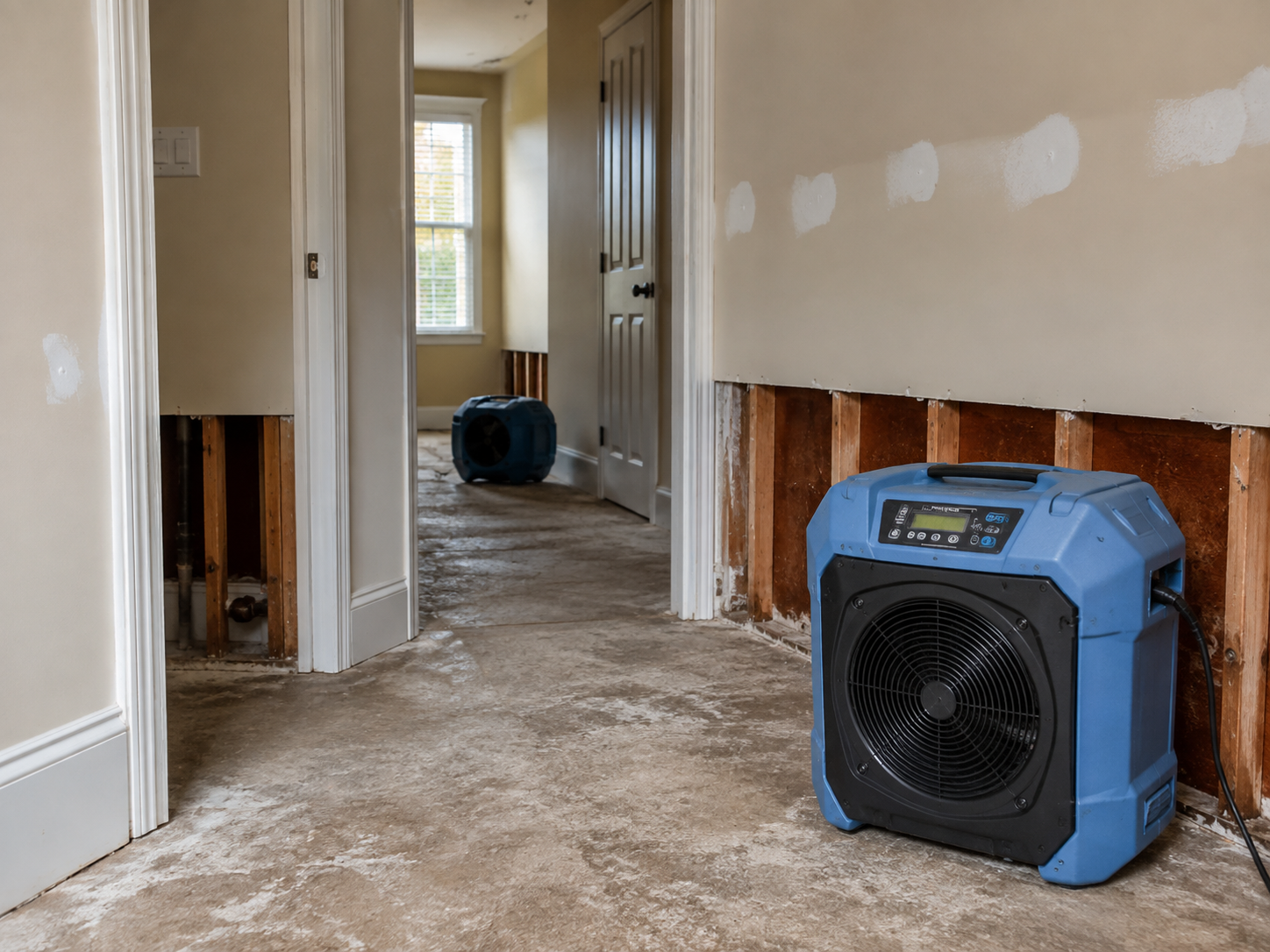
Drying coordination addresses remaining dampness after affected materials are removed and the work area is cleaned. Equipment and timing depend on the materials, room size, airflow, and moisture readings. The goal is to support a drier environment before reconstruction or normal use resumes, while continuing to watch for moisture that may be coming from an unresolved leak or condensation source.
Call NowOdor Source Treatment
Musty odor can remain when damp or contaminated material is still present in a concealed or difficult-to-reach area. Odor source treatment focuses on finding and addressing the material or moisture condition behind the smell rather than covering it with fragrance. Remediation may include controlled access, cleaning, material removal, moisture checks, and drying depending on what is found.
Call NowProperty Mold Remediation Services
Home Mold Remediation
Home mold remediation can address bathrooms, kitchens, bedrooms, attics, closets, garages, laundry areas, and other spaces affected by leaks or damp conditions. The work is planned around the room, materials, access, and moisture source. Containment, selective material handling, detailed cleaning, moisture verification, and drying are adjusted to the actual condition instead of treating every home as the same project.
Call NowRental Mold Remediation
Rental mold remediation helps landlords, managers, and occupants address mold connected to leaks, bathroom humidity, plumbing problems, or damp building materials. The work can be organized by room so access, containment, cleanup, and drying are easier to coordinate. Clear documentation of the affected area and work scope can also help everyone understand what was addressed during the project.
Call NowCondo Mold Remediation
Condo mold remediation may involve plumbing leaks, HVAC moisture, window intrusion, bathrooms, kitchens, or shared-wall conditions. Because units can connect to neighboring spaces, the work should stay focused on confirmed affected areas while considering how moisture may have traveled. Containment, access, cleaning, material handling, and moisture checks are coordinated around the specific unit layout.
Call NowApartment Mold Remediation
Apartment mold remediation can address mold in bathrooms, kitchens, closets, HVAC areas, ceilings, and leak-damaged walls. Multi-unit properties often require clear access planning so the affected room can be isolated without disrupting unrelated areas. The remediation scope is based on the actual condition of the unit, the moisture source, and the materials that need cleaning, drying, or selective removal.
Call NowOffice Mold Remediation
Office mold remediation helps workspaces affected by roof leaks, HVAC condensation, plumbing failures, restroom moisture, or damp interior finishes. The project can be organized to isolate the active area, control debris, handle affected materials, and verify moisture while keeping unaffected parts of the workplace separate. Scheduling and access planning can also help reduce unnecessary disruption to staff and visitors.
Call NowCommercial Remediation
Commercial remediation can support retail spaces, warehouses, offices, service properties, and other buildings affected by mold and moisture. Larger properties may require more detailed access, containment, equipment placement, debris routes, and drying coordination. The work scope should reflect the affected materials and operating needs of the building so the project remains organized from initial review through final moisture verification.
Call NowWhat Matters When Hiring For Mold Remediation In Las Vegas?
Clear Remediation Scope
A reliable remediation project starts with a clear definition of the affected area, building materials, moisture source, and planned work. If a certification or credential is required, confirm the exact credential and who holds it before work begins. That keeps the decision tied to documented project needs instead of relying on a broad label that may not describe the qualification being requested.
Controlled Remediation Process
Containment, selective material handling, HEPA-supported air management, detailed cleaning, debris control, moisture verification, and drying should work together as one coordinated process. The sequence is adjusted to the room, material condition, and access needs rather than forcing every property into the same package. Clear steps make the project easier for owners, managers, and occupants to understand.
Moisture-Aware Completion
Remediation should not end simply because visible growth has been removed. Remaining materials and nearby areas should be checked for moisture so drying or source correction can continue before repairs or normal use resume. A moisture-aware finish provides a more practical transition from active remediation to the next stage of the property work and reduces the chance that unresolved dampness is overlooked.
Certified Mold Remediation FAQs
Clear answers about certification questions, remediation scope, containment, material handling, HEPA-supported cleaning, moisture checks, drying, and what happens after the active work is complete.
Get Mold Remediation Help In Las Vegas
Call Watermold Las Vegas to discuss visible mold, concealed areas, containment, affected materials, HEPA-supported air management, debris control, moisture checks, and drying support. If your project requires a specific certification or credential, ask which credential applies before work begins so the scope and documentation expectations are clear.