Commercial and ResidentialMold Damage Remediation Las Vegas
Commercial and residential mold damage remediation addresses moisture-related damage affecting homes, offices, retail spaces, warehouses, suites, walls, ceilings, drywall, cabinets, window areas, and HVAC-adjacent materials. Roof leaks, plumbing failures, condensation, appliance leaks, sprinkler issues, and other water events can damage porous materials and create hidden growth. Water Mold Las Vegas organizes damage review, controlled access, selective material removal, detailed cleaning, moisture checks, drying support, debris control, and repair preparation around each confirmed property work zone.

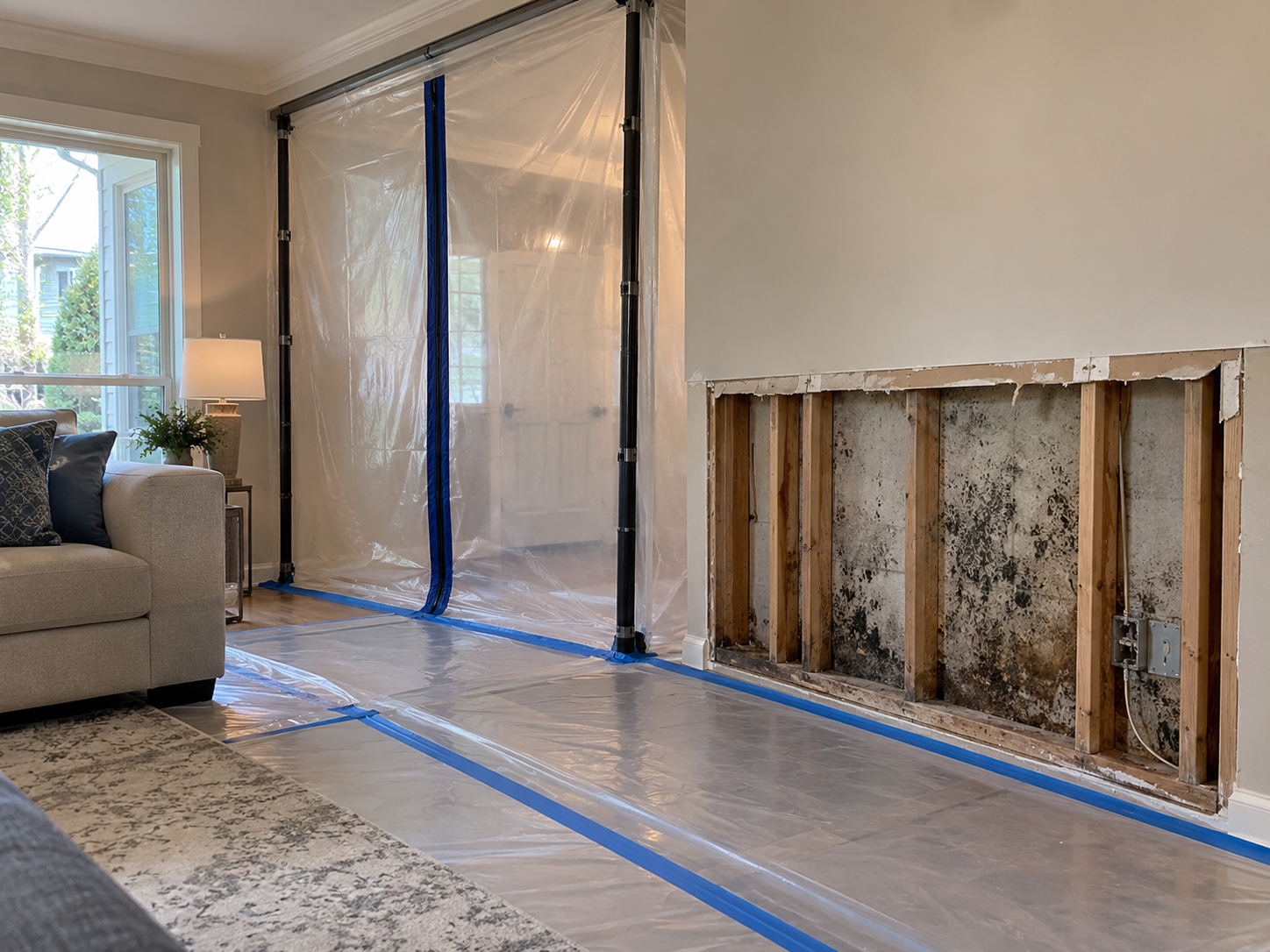
What Can Mold Damage Affect Across Different Properties?
The remediation plan should follow actual moisture paths, visible growth, material deterioration, access, and property use. Homes may require planning around residents, belongings, pets, and living areas, while commercial properties may require coordination around employees, customers, equipment, inventory, business hours, and shared access routes.
Water Mold Las Vegas keeps each project tied to confirmed conditions. Work can include focused access, selective material removal, detailed cleaning, moisture checks, drying support, debris handling, and repair preparation after the original source is corrected and affected materials are reviewed.
What Is Included In Property Mold Damage Remediation?
Commercial and residential mold damage remediation is organized around the moisture source, affected materials, visible damage, hidden conditions, occupancy, access needs, belongings, equipment, and repair requirements. The work can include focused assessment, controlled access, selective material removal, detailed cleaning, HEPA-supported air management, debris control, moisture checks, drying support, and repair preparation. Each service below stays tied to confirmed property conditions instead of assuming unaffected areas require the same work.
Common Property Mold Damage Areas
Residential Wall Damage
Residential wall mold damage can affect drywall, trim, insulation edges, wall coverings, and concealed cavities after plumbing leaks, roof water, condensation, window intrusion, or moisture from nearby rooms. Surface staining may not show the full damp area behind the finish. Work can include focused access, selective material removal, detailed cleaning, moisture checks, drying support, debris control, and repair preparation within the confirmed wall section after the source is corrected. Final review supports careful repair planning.
Call NowCommercial Wall Damage
Commercial wall mold damage can affect drywall, wall coverings, trim, insulation edges, and enclosed cavities after roof leaks, plumbing problems, exterior water entry, or recurring moisture. Business furniture, equipment, and traffic may need consideration before access begins. Work can include focused opening, selective material removal, cleaning retained surfaces, moisture checks, drying support, debris control, and repair preparation within the confirmed commercial wall section. Final moisture and condition checks help confirm readiness for careful damage remediation.
Call NowResidential Ceiling Damage
Residential ceiling mold damage can develop after roof leaks, plumbing water, HVAC condensation, or hidden moisture affects drywall, plaster, insulation edges, or nearby framing. A visible stain may be smaller than the damp material above it. Work can include focused opening, selective removal of damaged ceiling material, cleaning retained surfaces, debris control, moisture checks, drying support, and repair preparation after the source is corrected and the ceiling area is dry. Final review supports careful repair.
Call NowCommercial Ceiling Damage
Commercial ceiling mold damage can develop after roof leaks, HVAC condensation, upper-level water, pipe failures, sprinkler issues, or moisture above finished ceilings. Ceiling tile, drywall, insulation, and grid-adjacent materials may be affected. Work can include focused access, selective material removal, detailed cleaning, debris control, moisture checks, drying support, and repair preparation after the source is corrected and the commercial ceiling area is stable. Final moisture and condition checks help confirm readiness for careful damage remediation.
Call NowResidential Drywall Damage
Residential drywall mold damage may require selective removal when wallboard remains wet, softens, deteriorates, or develops growth that cannot be addressed through surface cleaning alone. Opening the affected section can reveal framing, insulation edges, wiring, plumbing, or hidden moisture. Work can include controlled drywall removal, debris handling, cleaning retained materials, moisture checks, drying support, and preparation for replacement finishes after the affected home area is stable. Final moisture and condition checks support careful remediation planning.
Call NowCommercial Drywall Damage
Commercial drywall mold damage may require selective removal when wallboard remains wet, softens, deteriorates, or develops growth after leaks or recurring moisture. Opening the affected section can reveal framing, insulation edges, wiring, plumbing, or hidden conditions. Work can include controlled drywall removal, debris handling, detailed cleaning, HEPA-supported air management, moisture checks, drying support, and preparation for replacement finishes after the commercial work area is stable. Final moisture and condition checks support careful damage remediation planning.
Call NowInterior Mold Damage Remediation
Residential Bathroom Damage
Residential bathroom mold damage can affect drywall, ceilings, vanities, cabinets, trim, and flooring edges after plumbing leaks, condensation, or recurring humidity. Moisture may remain behind finished materials after visible surfaces appear dry. Work stays focused on confirmed residential conditions and damaged materials. Work stays focused on confirmed residential conditions and damaged materials. Work stays focused on confirmed residential conditions and damaged materials. Final moisture and condition checks help confirm the affected property work area is.
Call NowResidential Kitchen Damage
Residential kitchen mold damage can affect sink cabinets, drywall, ceilings, wall finishes, flooring edges, and appliance areas after plumbing leaks, appliance water, condensation, or trapped moisture. Water can move behind cabinets and finishes before obvious damage appears. Work can include focused access, selective removal of damaged porous material, detailed cleaning, moisture checks, drying support, debris control, and repair preparation based on the confirmed moisture path. Final moisture and condition checks support careful damage remediation planning.
Call NowCommercial Office Damage
Commercial office mold damage can affect drywall, ceilings, walls, cabinets, window areas, storage rooms, conference spaces, and HVAC-adjacent materials after leaks, condensation, roof water, or recurring moisture. Work is organized around employees, furniture, electronics, records, and normal office access. Work stays focused on confirmed commercial conditions and damaged materials. Work stays focused on confirmed commercial conditions and damaged materials. Final moisture and condition checks help confirm the work area is ready for careful remediation planning.
Call NowCommercial Retail Damage
Commercial retail mold damage can affect sales floors, walls, ceilings, drywall, display areas, storage rooms, fitting areas, and finished materials after leaks or water intrusion. Work can be planned around merchandise, fixtures, customer paths, and normal business activity. Services can include selective material removal, detailed surface cleaning, moisture checks, drying support, debris control, and repair preparation based on the confirmed moisture source and material condition. Final moisture and condition checks support careful damage remediation planning.
Call NowCommercial Storage Damage
Commercial storage mold damage can affect walls, ceilings, drywall, shelving surrounds, cabinets, flooring edges, and stored-property areas after leaks, roof entry, condensation, or moisture migration. Inventory or supplies may need to be moved so affected building materials can be reached safely. Work can include selective material removal, detailed cleaning, debris control, moisture checks, drying support, and repair preparation after the source is corrected. Final moisture and condition checks help confirm readiness for careful damage remediation.
Call NowCabinet Mold Damage
Cabinet mold damage can affect residential kitchen cabinets, bathroom vanities, commercial breakroom cabinets, sink bases, toe kicks, backs, side panels, and nearby wall surfaces exposed to leaks or trapped moisture. Enclosed spaces may remain damp after visible water is gone. Work can include removing damaged components, cleaning retained surfaces, moisture checks, drying support, debris control, and coordination for cabinet, wall, or finish repairs after source correction. Final moisture and condition checks support careful remediation planning.
Call NowWater And Moisture Related Damage
Roof Leak Mold Damage
Roof leak mold damage can affect attic or roof-adjacent materials, ceilings, walls, insulation edges, drywall, storage spaces, and interior finishes where water travels from roofing, flashing, vents, or penetrations. The visible stain may not show the full moisture path. Work stays focused on confirmed roof conditions and damaged materials. Work stays focused on confirmed roof conditions and damaged materials. Final moisture and condition checks help confirm the work area is ready for careful remediation planning.
Call NowPlumbing Leak Damage
Plumbing leak mold damage can develop when supply lines, drains, fixtures, hidden pipes, or connected plumbing wet walls, ceilings, drywall, cabinets, flooring edges, or nearby finishes. Moisture may continue spreading behind surfaces before the leak becomes obvious. Work stays focused on confirmed plumbing conditions and damaged materials. Work stays focused on confirmed plumbing conditions and damaged materials. Work stays focused on confirmed plumbing conditions and damaged materials. Final checks support careful and organized repair planning.
Call NowHVAC Moisture Damage
HVAC-related moisture can damage ceilings, walls, drywall, mechanical closets, vent surrounds, cabinets, and nearby finishes when condensation or drainage problems remain active. The affected area may be limited even when moisture is near HVAC equipment. Work can include focused access, selective material removal, surface cleaning, moisture checks, drying support, debris control, and source correction within the confirmed area before repaired finishes are installed. Final moisture and condition checks help confirm readiness for careful damage remediation.
Call NowWater Damage Mold
Water damage mold can develop after roof water, plumbing failures, appliance leaks, sprinkler issues, or other events leave walls, ceilings, drywall, cabinets, flooring edges, or other materials damp. The remediation scope should follow the confirmed water path rather than visible staining alone. Work can include selective material removal, detailed cleaning, moisture checks, drying support, debris control, and repair preparation after the water source is stopped. Final moisture and condition checks support careful damage remediation planning.
Call NowHidden Mold Damage
Hidden mold damage can develop behind drywall, above ceilings, inside cabinets, around windows, in wall cavities, near HVAC-adjacent materials, or inside other concealed areas where moisture remains. Staining, odors, soft materials, or recurring dampness can indicate a hidden condition. Work stays focused on confirmed hidden conditions and damaged materials. Work stays focused on confirmed hidden conditions and damaged materials. Final moisture and condition checks help confirm the work area is ready for careful remediation planning.
Call NowMulti Room Damage
Multi-room mold damage may occur when roof leaks, condensation, plumbing failures, sprinkler issues, appliance water, or other moisture sources affect more than one interior area. Each room should be reviewed according to confirmed conditions rather than assuming identical damage throughout the property. Work can include phased access, selective material removal, detailed cleaning, debris control, moisture checks, drying support, and repair preparation for each affected area after source correction. Final moisture review supports careful repair planning.
Call NowProperty Remediation Support
Occupied Home Remediation
Residential mold damage remediation in an occupied home requires planning around residents, belongings, pets, entry routes, sleeping areas, daily routines, and normal household activity. The affected work zone should be clearly defined so unnecessary traffic is limited. Depending on scope, work can include controlled access, selective material removal, surface cleaning, debris management, moisture checks, drying support, and phased scheduling while unaffected living areas remain outside the confirmed zone. Final moisture review supports careful repair planning.
Call NowOccupied Business Remediation
Commercial mold damage remediation in an occupied business requires planning around employees, customers, furniture, equipment, inventory, entry routes, work schedules, and normal activity. The affected work zone should be clearly defined so unnecessary traffic is limited. Depending on scope, work can include containment, controlled access, selective material removal, surface cleaning, debris management, moisture checks, drying support, and phased scheduling while unaffected business areas remain outside the confirmed zone. Final moisture review supports careful repair planning.
Call NowMold Damage Assessment
A mold damage assessment helps identify visible growth, moisture sources, damaged materials, hidden concerns, access needs, room connections, occupancy impacts, and the practical extent of remediation before work begins. The review can cover residential and commercial walls, ceilings, drywall, cabinets, storage areas, living spaces, offices, and HVAC-adjacent materials. Work stays focused on confirmed mold conditions and damaged materials. Final moisture and condition checks help confirm the property work area is ready for careful remediation planning.
Call NowControlled Material Removal
Controlled material removal helps address mold-damaged drywall, ceiling materials, cabinets, insulation edges, trim, and other porous components that cannot be retained. The removal area should be based on confirmed material condition and moisture exposure rather than unnecessary demolition. Work can include access setup, debris control, careful removal, cleaning of retained surfaces, moisture checks, drying support, and preparation for replacement materials after the affected area is stable. Final moisture and condition checks support careful remediation planning.
Call NowDrying Support
Mold damage drying support helps reduce remaining moisture in drywall, ceilings, walls, cabinets, framing edges, and other affected materials after selective removal and cleaning. The drying approach depends on material type, property use, access, airflow, temperature, humidity, and source correction. Work stays focused on confirmed drying conditions and damaged materials. Work stays focused on confirmed drying conditions and damaged materials. Work stays focused on confirmed drying conditions and damaged materials. Final review supports careful repair.
Call NowRepair Preparation
Mold damage repair preparation begins after affected materials are removed, retained surfaces are cleaned, remaining moisture is addressed, and the work area is reviewed for readiness. Preparation can include final debris checks, moisture verification, confirmation of retained material condition, and coordination for replacement drywall, ceiling finishes, cabinets, trim, or other components. This helps homeowners, businesses, and contractors begin repairs with a clearer understanding of completed remediation conditions. Final checks support careful and organized repair planning.
Call NowWhy Address Mold Damage Early?
Define Affected Areas
Mold damage remediation should begin with a clear understanding of affected materials, visible growth, moisture conditions, hidden concerns, access needs, and property use. Defining the work area helps determine what can be retained, what may need selective removal, and where drying or further access is required. A focused review also helps residents, owners, managers, tenants, and contractors understand the practical scope before demolition, cleaning, or repair work begins. Final moisture review supports careful repair planning.
Correct Moisture Sources
Mold damage can continue when the moisture condition supporting growth remains active. Roof leaks, HVAC condensation, plumbing failures, appliance leaks, exterior water entry, sprinkler issues, and damp building materials can keep walls, ceilings, drywall, cabinets, and storage areas affected. Moisture checks can show where source correction, additional drying, or focused access is still needed. Addressing the cause keeps remediation tied to actual property conditions and supports better repair planning. Final review supports careful repair planning.
Prepare Property Repairs
Mold damage remediation should end with a clear understanding of which materials were removed, which surfaces were cleaned, what still needs drying, and whether the area is ready for repair. Final checks can include debris review, moisture verification, retained material condition, and coordination around replacement finishes. This helps homeowners, owners, managers, tenants, and contractors move into repairs without guessing whether the confirmed property work area is ready for normal use. Final review supports careful repair.
Commercial And Residential Mold Damage FAQs
Clear answers about property mold damage, affected materials, drywall, roof leaks, HVAC moisture, occupied properties, drying, and repair readiness.
Get Property Mold Damage Help
Call Water Mold Las Vegas to discuss mold-damaged drywall, ceilings, walls, cabinets, residential interiors, commercial finishes, roof leaks, plumbing moisture, HVAC condensation, hidden mold, or water-damaged materials. The work plan is based on confirmed damage, moisture source, material condition, property access, occupancy, removal needs, drying requirements, debris handling, and whether the completed area is ready for repair.