Residential Mold Removaland Testing Las Vegas
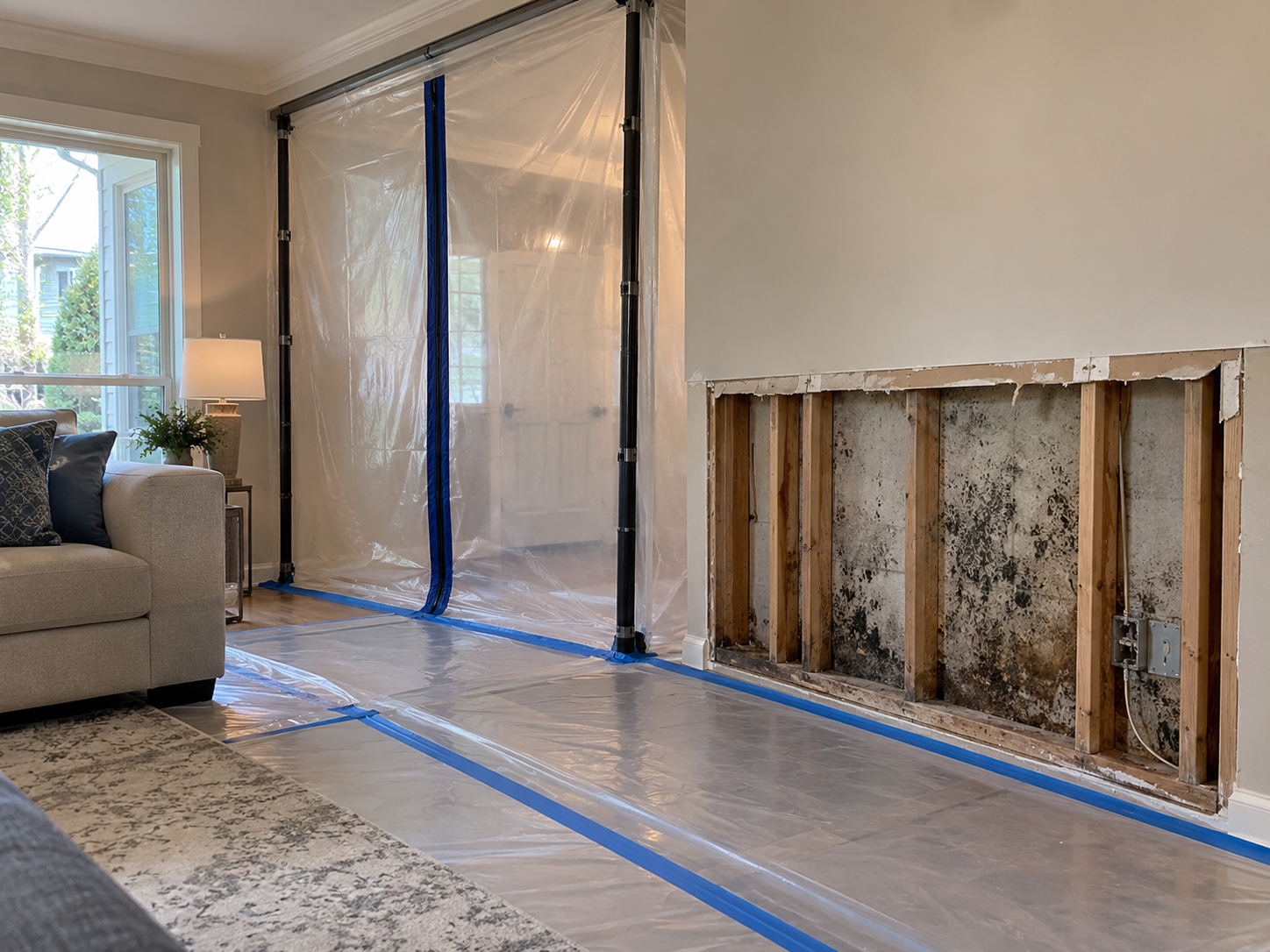
Residential mold removal and testing combines physical removal work with targeted evaluation of home areas where mold or moisture may be present. Testing can be used when sampling is appropriate, while removal focuses on damaged porous materials that cannot be retained. Water Mold Las Vegas organizes visual review, moisture checks, selective sampling, controlled material removal, surface cleaning, debris handling, drying support, and repair preparation around the actual conditions found in bathrooms, kitchens, bedrooms, closets, attics, walls, ceilings, and other accessible areas.
When Can Mold Testing Help Guide Removal?
Depending on the situation, sampling may involve air or surface collection from selected areas. Results are most useful when considered together with visible material condition, water history, moisture findings, and whether damaged porous materials already require removal.
Water Mold Las Vegas keeps removal and testing connected to the actual home conditions. The process can identify where sampling may add value, where selective removal is already justified by material damage, and what cleanup, drying, or repair steps may follow after the affected area is addressed.
What Is Included In Mold Removal And Testing?
Residential mold removal and testing should be organized around the reason for testing, the visible condition of materials, moisture history, access, and whether removal is already needed. Some areas benefit from sampling, while others can be addressed based on visible damage and confirmed moisture. The services below separate evaluation, sampling, removal, drying, and follow-up so each step has a clear purpose and the homeowner can understand what information or work each part provides.
Residential Mold Testing Services
Visual Mold Review
A visual mold review examines accessible surfaces for growth, staining, material changes, leak evidence, and moisture-related conditions before testing or removal decisions are made. Walls, ceilings, drywall, cabinets, trim, windows, and other visible finishes can be reviewed together with the homeowner's concerns and water history. The goal is to identify where sampling may add useful information and where material condition already points toward cleanup, drying, or selective removal. Findings help guide practical removal drying cleanup.
Call NowAir Mold Sampling
Residential air mold sampling can be used when information about airborne particles in selected home areas may help clarify a concern. Sampling should be planned around room location, current conditions, visible findings, and the reason for testing rather than collected without purpose. Results are most useful when interpreted with moisture history and material observations. Air sampling does not replace inspection, source correction, or removal of clearly damaged porous materials. Findings help guide practical removal drying.
Call NowSurface Mold Sampling
Surface mold sampling can collect material from a selected visible area when identifying what is present on that surface may be useful. The sample location should be chosen based on an actual concern, visible condition, or comparison need rather than testing every surface in the home. Results should be reviewed alongside moisture findings and material condition. Sampling alone does not determine whether damaged drywall, trim, cabinets, or other porous materials can remain. Based on findings.
Call NowMoisture Mapping
Residential moisture mapping reviews selected home areas for patterns that may help explain where water traveled or which materials remain damp. Readings can be combined with visible staining, softened drywall, cabinet swelling, leak history, and room layout. The goal is not to label every elevated reading as mold, but to identify areas that may need drying, closer access, additional evaluation, or selective removal before repair work begins. Findings help guide practical removal drying cleanup testing.
Call NowPre Removal Testing
Pre-removal mold testing may be considered when sampling can answer a specific question before materials are disturbed. The need depends on visible growth, material condition, moisture history, room use, and whether testing will change the work plan. In some situations, clearly damaged porous materials already need removal regardless of sample results. Testing should have a defined purpose so it adds useful information instead of delaying necessary moisture correction or material removal. Findings guide next steps.
Call NowPost Removal Testing
Post-removal mold testing may be considered after affected materials are removed, the work area is cleaned, and drying is complete. The purpose is different from initial testing because the focus is on conditions after removal rather than identifying the original concern. Sampling should be planned around the specific work area and project needs. Results should be reviewed together with visual cleanliness, moisture conditions, and whether the space is ready for repair work. Based on findings.
Call NowRoom Specific Mold Evaluation
Bathroom Mold Testing
Bathroom mold testing can focus on selected areas where repeated humidity, plumbing leaks, shower moisture, or condensation has created an ongoing concern. Sampling may be useful when visible material conditions do not provide enough information or when a specific surface needs evaluation. Testing can be paired with inspection of ceilings, walls, vanities, cabinets, trim, and drywall. Moisture correction remains important because testing alone does not stop recurring dampness. Findings help guide practical removal drying cleanup.
Call NowKitchen Mold Testing
Kitchen mold testing can target sink bases, cabinet interiors, wall sections, drywall, ceilings, and appliance-adjacent areas when leak history or visible conditions raise a specific concern. Sampling should be chosen based on what question needs to be answered rather than performed throughout the entire kitchen without reason. Findings can be reviewed with plumbing history, cabinet condition, moisture readings, and whether damaged porous materials require selective removal before repairs proceed. Findings help guide practical removal drying.
Call NowBedroom Mold Testing
Bedroom mold testing may be considered when recurring odors, window condensation, roof leaks, wall staining, closet moisture, or unexplained surface changes raise a concern. Selected sampling can provide added information when the visible condition alone is not clear. The review should also consider nearby bathrooms, exterior walls, windows, ceilings, and recent water events. Testing is most useful when connected to a specific question about the affected bedroom area. Findings help guide practical removal drying cleanup.
Call NowCloset Mold Testing
Closet mold testing can focus on selected surfaces or air conditions when recurring odors, exterior-wall moisture, plumbing nearby, limited airflow, or visible changes create a specific concern. Stored belongings and shelving can make it harder to see building materials, so inspection should come before broad sampling. Testing can be useful when it helps clarify whether a selected closet area needs closer access, moisture correction, cleaning, or removal of affected porous materials. Findings guide next steps.
Call NowAttic Mold Testing
Attic mold testing may involve selected surfaces or air sampling when roof leaks, condensation, ventilation concerns, or visible material changes require additional information. The testing plan should account for safe access, attic layout, roof sheathing, framing, insulation edges, and the location of the suspected condition. Results should be reviewed with moisture and ventilation findings. Testing does not replace repair of roof entry points or other moisture sources that continue affecting attic materials. Based on findings.
Call NowWall Mold Testing
Wall mold testing can target a selected surface when staining, recurring dampness, window intrusion, plumbing history, or visible growth raises a specific concern. Testing should not assume that an entire wall cavity is affected based on one sample. Inspection, moisture findings, material condition, and access limitations are important when deciding whether the wall needs monitoring, further access, selective removal, drying, or repair after the moisture source is addressed. Findings help guide practical removal drying cleanup.
Call NowMoisture And Leak Related Testing
Ceiling Mold Testing
Ceiling mold testing may be considered when roof water, upper-level plumbing, HVAC condensation, or unexplained staining affects a selected area. Sampling can provide added information about a visible surface, but it should be connected to inspection of the likely moisture path. A sample does not show the full condition above a finished ceiling. Moisture findings, material damage, leak history, and access needs still guide whether removal, drying, or repair is required. Findings guide next steps.
Call NowDrywall Mold Testing
Drywall mold testing can be useful when a selected wallboard area has staining or visible growth but the extent or identity of the surface condition is unclear. Testing should be considered with the drywall's physical condition, moisture level, leak history, and whether the board is soft or deteriorated. Clearly damaged porous drywall may still require removal even if testing is performed. Sampling should answer a practical question rather than replace material assessment. Based on findings.
Call NowRoof Leak Mold Testing
Roof-leak mold testing can focus on selected attic, ceiling, or upper-wall areas after water has entered through roofing, flashing, vents, or penetrations. Sampling may add information when visible conditions are uncertain, but the leak path and material moisture remain central to the evaluation. Testing should be coordinated with roof source correction, inspection of affected finishes, and decisions about whether damaged porous materials require selective removal, drying, or repair. Findings help guide practical removal drying cleanup.
Call NowPlumbing Leak Testing
Plumbing-leak mold testing can target selected wall, cabinet, ceiling, or flooring-edge areas after water from supply lines, drains, fixtures, or hidden pipes has affected building materials. Sampling may be useful when the visible condition does not answer a specific question. The evaluation should still follow the known leak path, moisture readings, material damage, and access needs. Fixing the plumbing source remains necessary regardless of testing results. Findings help guide practical removal drying cleanup testing and.
Call NowHVAC Area Testing
Residential mold testing near HVAC equipment can focus on accessible building materials around air handlers, drain lines, vents, ceilings, walls, and mechanical closets when condensation or drainage issues are suspected. Testing should not automatically be treated as testing the entire HVAC system. The purpose, sample location, visible material condition, and moisture source should be clear. Separate HVAC evaluation may be appropriate when the concern involves internal system components rather than nearby building finishes. As needed.
Call NowHidden Mold Evaluation
Hidden mold evaluation begins with clues such as recurring odors, soft materials, staining, repeated dampness, or a known leak behind finished surfaces. Testing may sometimes add information, but concealed conditions cannot always be confirmed without access. The decision to open a wall, ceiling, cabinet area, or other enclosure should consider moisture history, material condition, and the likelihood that access will change the removal or repair plan. Findings help guide practical removal drying cleanup testing and.
Call NowRemoval And Follow Up Services
Water Damage Testing
Water-damage mold testing can be used after a roof leak, plumbing failure, appliance event, or other water incident when selected areas need additional evaluation. Sampling should follow the actual water path rather than unrelated rooms. Testing results are most useful when considered with moisture readings, material damage, drying history, and visual findings. Clearly deteriorated porous materials may still need selective removal even when sampling is part of the project. Findings help guide practical removal drying.
Call NowRemoval Scope Review
A residential removal scope review combines visible findings, testing purpose, moisture history, affected materials, access, and room use before demolition begins. The scope can identify which components need selective removal, which surfaces can remain, where additional sampling may be useful, and what areas should stay outside the work zone. Clear planning helps prevent unnecessary demolition and keeps testing connected to decisions that can actually change the removal or repair approach. Findings help guide practical removal.
Call NowSelective Material Removal
Selective material removal addresses drywall, ceiling material, trim, cabinet components, insulation edges, or other porous items that cannot be retained after mold and moisture damage. Removal boundaries should be based on confirmed condition rather than broad assumptions from a single sample. The work can include controlled access, debris handling, cleaning retained materials, moisture checks, and drying support. Testing may be used separately when a specific question remains before or after removal. Findings guide next steps.
Call NowSurface Cleaning Review
A surface cleaning review looks at retained materials after selected removal work to determine whether visible debris, dust, residue, or growth remains in the work area. The review is separate from laboratory testing and focuses on observable cleanliness and material condition. When testing is part of the project, sampling should occur for a defined reason after appropriate cleanup steps are complete. Moisture conditions should also be reviewed before repair work proceeds. Findings guide next steps.
Call NowResidential Drying Support
Residential drying support helps address moisture that remains after leaks are stopped and affected materials are removed or opened. Drying decisions can use material condition, airflow, temperature, humidity, and moisture readings rather than mold testing alone. Walls, ceilings, cabinet areas, framing edges, and other materials may need time before repairs begin. Testing does not replace drying, because damp building materials can continue creating conditions that support future growth. Findings help guide practical removal drying cleanup.
Call NowRepair Readiness Review
A repair readiness review takes place after required removal, cleaning, and drying steps are complete. The area can be checked for visible debris, remaining moisture, retained material condition, and whether additional testing is part of the project plan. The purpose is to determine whether the residential work zone is ready for replacement drywall, trim, cabinets, ceiling finishes, or other repairs. Testing results, when used, should be considered with these physical conditions. Findings guide next steps.
Call NowWhy Keep Testing Tied To A Clear Purpose?
Test For A Reason
Residential mold testing is most useful when it is designed to answer a clear question about a selected home area. Sampling without a purpose can create results that are difficult to interpret or unrelated to the actual material condition. A focused plan connects the test location, visible findings, moisture history, and homeowner concern so the result can support a practical decision about removal, further access, drying, monitoring, or repair. Findings help guide practical removal drying.
Use More Than Results
Testing results are only one part of a residential mold evaluation. Material condition, visible growth, moisture readings, leak history, room location, and access can be equally important when deciding what should happen next. A sample result should not override obvious water damage or deteriorated porous material. Combining testing with physical observations keeps removal and cleanup decisions connected to the actual home rather than relying on one number or laboratory finding alone. Findings guide next steps.
Match Testing To Removal
Testing and removal should work together only when the testing result can affect the work plan. Some damaged materials already need removal because of water exposure or deterioration, while other areas may benefit from sampling before a decision is made. Keeping those situations separate helps avoid unnecessary testing and unnecessary demolition. The homeowner can then understand why a sample was collected, what question it addresses, and how it relates to the removal scope. As needed.
Residential Mold Removal And Testing FAQs
Clear answers about residential mold testing, air and surface sampling, hidden conditions, removal decisions, post-removal testing, and repair readiness.
Get Mold Removal And Testing Help
Call Water Mold Las Vegas to discuss visible mold, suspected hidden growth, water-damaged materials, recent leaks, moisture concerns, or whether testing may be useful before or after removal. The next step can be based on the home area, testing purpose, visible condition, material damage, access, moisture history, removal needs, drying requirements, and repair plans.